Find a Dealer


 Home
Home About Us
 Products
 Accessories
 Spare Parts
 Support
 Contact Us




Pressure Washers vs Power Washers: Key Differences Explained
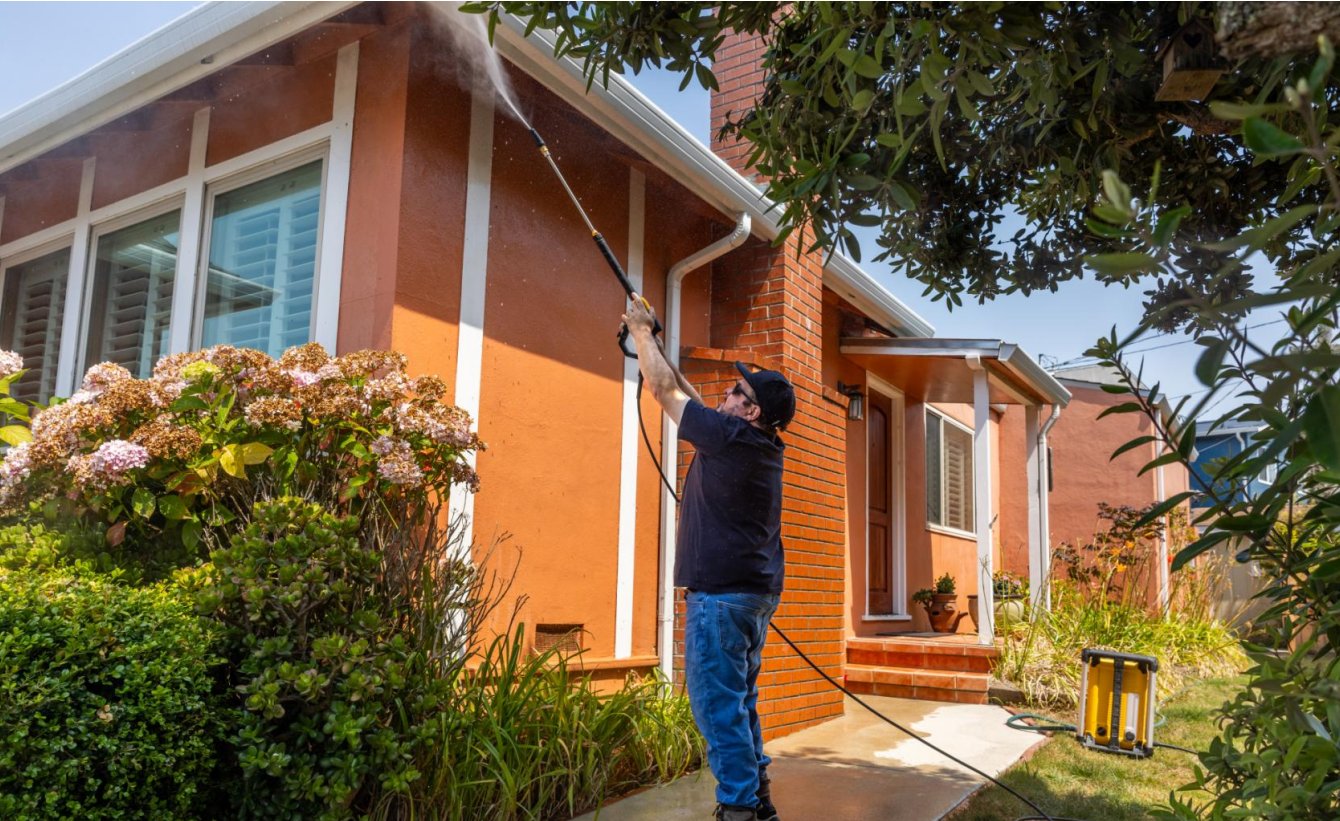
Whether you’re cleaning at home or doing it for a living, the right washer can be a powerful ally. In this case, using the right equipment makes a major difference. One of the most common questions in the world of exterior cleaning is: What’s the difference between a pressure washer and a power washer?
This confusion often arises because the two machines look nearly identical and share many components. Both shoot water at high pressure through a hose and nozzle. But there’s a key difference that separates them, and knowing which to choose could save you a lot of time, effort, and potentially damage to your surfaces.
Let’s break it all down.
What Sets Them Apart?
The short answer? It starts with the temperature. A power washer heats the water, while a pressure washer does not. It’s this simple difference that has major implications for how each is used.
Power washers use hot water to loosen things like grime, grease, and organic growth. Meanwhile, pressure washers stick with cold water, which is why they’re used to clean everything from tiles and bricks to dust, dirt, grime, footpaths, windows, and much more.
Still confused? That’s understandable. The terminology is often used interchangeably. But the machines themselves are not.
Understanding PSI and LPM
When shopping around or comparing specifications, two terms will keep popping up: PSI (pounds per square inch) and LPM (liters per minute). Together, these determine the washer’s cleaning effectiveness.
Here’s what you need to know before buying:
Here’s what you need to know before buying:
- PSI is the water pressure. A higher PSI means the washer has more force to break up stubborn grime and stains. Some models, like the Honda powered BWM PWC4000H Commercial Pressure Washer, come with an impressive PSI level of 4000. In practical terms, this industrial standard technology allows the operator to complete tough cleaning tasks in just a matter of minutes.
- LPM is the water flow rate. Higher LPM means more water is delivered to flush dirt away. As an example, there are shower heads with various different LPM levels, and these levels affect how much and how quickly water flows.
For everyday home tasks, a machine with 1500 to 2500 PSI and 5.7 to 9.5 LPM will work well, but for tougher jobs (like oil-stained driveways or commercial purposes), aim for 3000+ PSI and a higher LPM.
Different Types of Pressure Washers
Not all washers are the same, even within the pressure or power washer categories. Here’s a breakdown of the most common types and where each fits in.
Cold-Water Battery & Electric Pressure Washers:
- Typically range from 800 to 1500 PSI.
- Lightweight, quiet, and plug into a standard power outlet.
- Great for cars, small patios, or light-duty cleaning.
Cold-Water Petrol Pressure Washers:
- More powerful than battery models, often reaching 3000 to 4000 PSI.
- Portable and suitable for larger outdoor areas.
- Ideal for heavy-duty residential or small commercial jobs.
Hot-Water Power Washers:
- Include an onboard heater or burner to raise water temperature.
- Designed for serious cleaning tasks like oil, grease, or mould.
- Common in industrial and commercial environments.
- Higher running and maintenance costs.
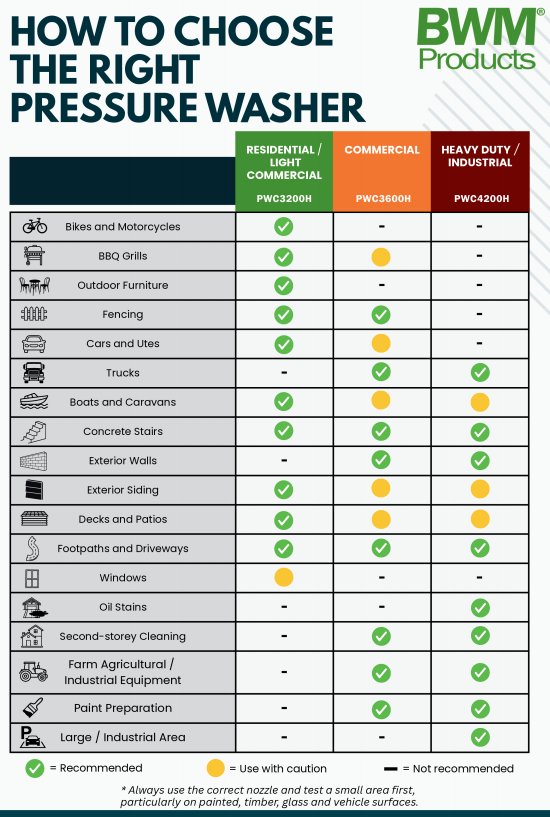
Here’s our very own guide to choosing the right pressure washer!
When to Use a Pressure Washer vs a Power Washer
Knowing when to use which type of washer depends on what you’re cleaning and how deeply the dirt is embedded.
Pressure Washers are best for:
- Washing vehicles, including cars, motorbikes, trucks, utes, and boats.
- Cleaning wooden decks, fences, pergolas, and outdoor furniture.
- Removing dust, cobwebs, and loose debris from walls, windows, and building exteriors.
- Freshening up concrete paths, stone pavers, and tiled patios that aren’t heavily stained.
- Rinsing down tools, bins, outdoor equipment, farm/agricultural machinery.
- Cleaning signage, awnings, and storefronts without damaging paint or surfaces.
- Maintaining outdoor areas at commercial properties such as cafés, schools, and retail stores.
Power Washers are ideal for:
- Removing oil stains from driveways, garage floors, or industrial surfaces.
- Blasting grime from heavily soiled machinery or construction equipment.
- Stripping chewing gum from public footpaths or commercial pavements.
- Cleaning mould, algae, and bacteria from concrete, brick, and other porous surfaces.
- Tackling baked-on grease or dirt in commercial kitchens, workshops, or food processing areas.
- Prepping surfaces for painting, sealing, or resurfacing.
In short: Use pressure washers for general maintenance and routine cleaning of more delicate or lightly soiled surfaces. Reach for a power washer when you’re dealing with heavy grime, grease, or need to sanitise and deep-clean tough, high-traffic areas.
Cost and Practical Considerations
If you’re deciding between hiring or buying, it helps to consider the costs – not just up front, but ongoing.
Pressure Washers:
- Less expensive to purchase and operate.
- Easier to maintain with fewer parts.
- Simple to store and transport.
- Widely available in hardware stores for DIY use.
Power Washers:
- Cost more due to the heating system.
- Require fuel (often diesel or kerosene) for the burner.
- Need more maintenance: cleaning the burner, checking coils, and keeping fuel lines clear.
- Tend to be bulkier and heavier.
Safety and Surface Protection Tips
Regardless of the washer type, safety is always important. High-pressure water can cut skin, damage surfaces, and ruin plants if not used correctly.
Keep these tips in mind to avoid any safety-related issues!
- Select the right nozzle: A narrow nozzle increases pressure but may damage softer surfaces. Start with a wider spray and adjust if needed.
- Maintain distance: Don’t start spraying right up against a surface. Stand back and move closer gradually.
- Avoid soft materials: Use lower pressure on wood, painted surfaces, or fabrics to avoid stripping paint or splintering material.
- Protect yourself: Wear protective goggles, gloves, and sturdy footwear.
- Watch out for pets and plants: The high pressure can harm living things. Avoid aiming the spray near gardens or animals.
- Use cleaning agents carefully: If you’re applying degreasers or detergents, make sure they’re suited to your washer type and surface material.
Taking these simple precautions will allow you to clean effectively without causing unintended damage.
Find The Perfect Pressure Washer at BWM Products
If you need a high-quality pressure washer, BMW Machinery is the perfect place to start. You can choose from our very BWM series.
Let’s take a look at some of the washers currently for sale!
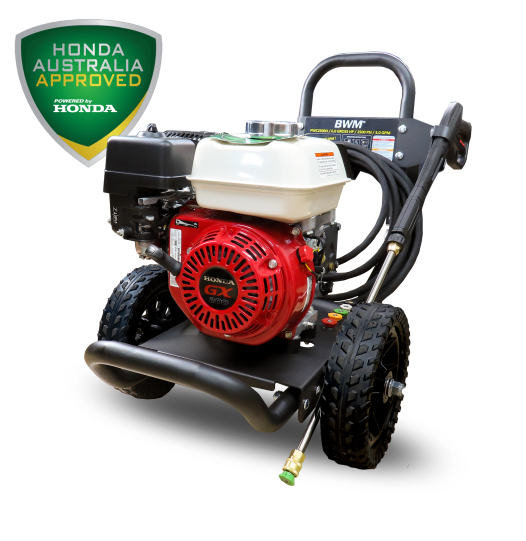
BWM PWC2500H Commercial Pressure Washer – 2500PSI – Honda GX200
Built with a top of the range 2500PSI Annovi Reverberi (AR) pump, this washer allows you to effortlessly clean garden tools, vehicles, façades, driveways, pavements, and terraces.
Designed for tough Australian conditions, this machine is built for both contractors on the move and heavy-duty domestic applications. Thanks to its powerful Honda GX200 OHV engine, the PWC2500H can complete your jobs with ease!
FEATURES:
- 2500PSI, 11LPM Commercial Annovi Reverberi (AR) RCV3G25 pump
- Powered by Honda GX200 engine (Honda Australia Approved)
- 5x spray nozzles ranging from 0° to 65°
- Quick release couplings on spray lance for changing accessories quickly and easily
- Second handle on the spray lance provides better handling and improved comfort
- Cleaning solution siphon hose for detergent intake
- Airless tyres reducing the risk of flat tyres
- Heavy-duty steel frame for tough Australian conditions
- Front bull bar for engine protection
- Collapsible handles for easy transportation and storage
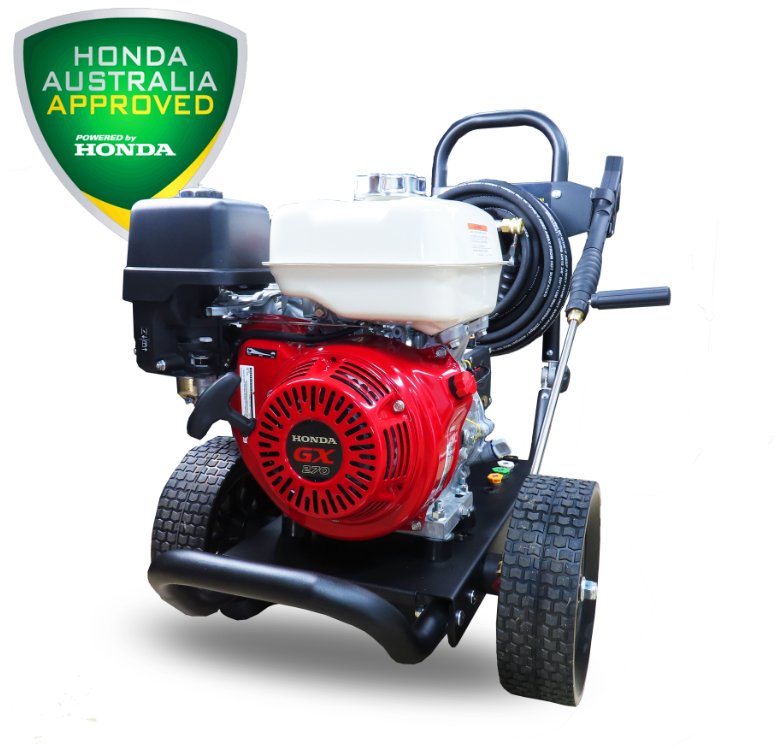
BWM PWC3600H Commercial Pressure Washer – Honda GX270 3600PSI
After something with a little more grunt? Built with a 3600psi Annovi Reverberi (AR) commercial grade triplex pump, this machine cleans up the dirtiest jobs with ease. The industrial design and heavy-duty frame makes it ideal for professional cleaners and contractors on the move.
FEATURES:
- 3600psi, 3.5GPM Commercial Annovi Reverberi (AR) RRV3.5G36 pump
- Powered by Honda GX270 engine (Honda Australia Approved)
- 5x spray nozzles ranging from 0° to 65°
- Quick release couplings on spray lance for changing accessories quickly and easily
- Second handle on the spray lance provides better handling and improved comfort
- Cleaning solution siphon hose for detergent intake
- Airless tyres reducing the risk of flat tyres
- Heavy duty steel frame for tough Australia conditions
- Front bull bar for engine protection
- Collapsible handles for easy transportation and storage
Find BWM Pressure Washers Near You
Looking for reliable pressure washers in Australia? BWM Products offers a range of high-performance pressure washers available online and through participating dealers nationwide.
Selected models are available to view through our dealer network, where you can compare options and get help choosing the right pressure washer for your cleaning needs.
As stock may vary between locations, we recommend checking our pressure washer range online or contacting your nearest BWM Products dealer before visiting.