Find a Dealer


 Home
Home About Us
 Products
 Accessories
 Spare Parts
 Support
 Contact Us




Hydraulic or Kinetic Log Splitters: Which Is Better for Your Needs?
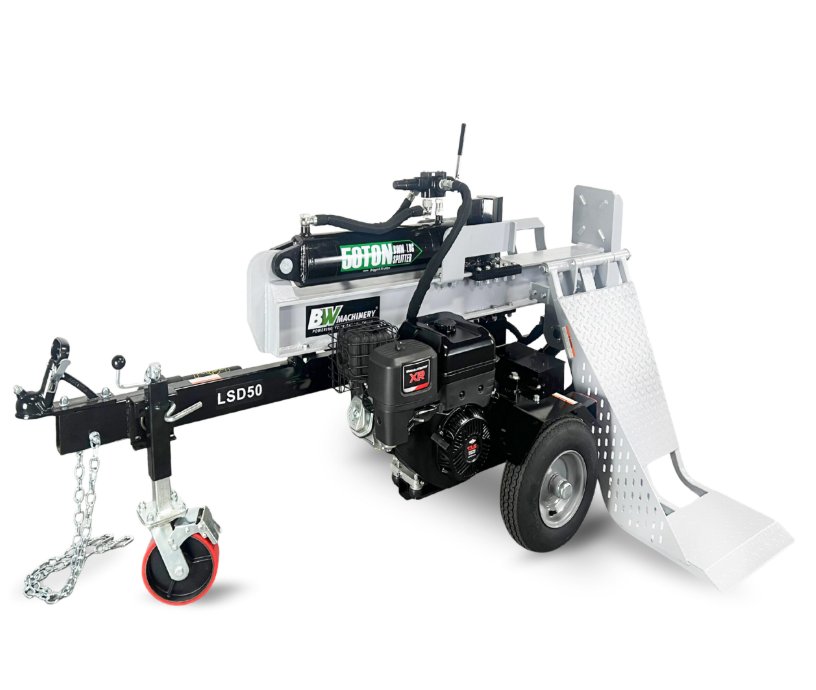
If you’ve ever spent a day splitting wood with an axe, you’ll know just how physically draining and inefficient the process can be. Whether you’re stocking up for winter, clearing property, or collecting timber for commercial purposes, a reliable log splitter is well worth the investment.
However, not all log splitters are built the same, and there are two technologies that dominate the market; hydraulic and kinetic. Both have their own strengths and limitations, and finding the best option hinges on your own personal preferences and requirements.
Throughout this guide, we’ll break down the technical differences between hydraulic and kinetic log splitters, provide a clear analysis of what to consider before buying, and take a look at a few of the best models on the market today.
The Difference Between Hydraulic and Kinetic Technology
Hydraulic and kinetic splitters differ in how they generate and apply the force needed to break logs apart.
Hydraulic log splitters use fluid pressure to drive a piston that pushes a log into a fixed or moving wedge. This is a gradual build-up of force. The pressure is generated via a hydraulic pump powered by either a petrol engine or an electric motor.
The overall cycle (ram extension, splitting, and return) takes around 12 to 20 seconds depending on the model. What you get is an immense, consistent force that powers through hardwood, knots, and oversized logs.
Kinetic log splitters use a flywheel system to store and rapidly release energy, delivering cycle times often under three seconds. They are generally lighter and require less maintenance, but offer lower splitting force and are best suited to softer timber and small- sized logs.
Hydraulic Log Splitters: The Basics
Hydraulic log splitters are by far the most common type used in both residential and commercial settings. Their defining characteristic is the use of hydraulic pressure to drive the splitting mechanism. The system typically consists of:
- A petrol or electric engine
- A hydraulic pump
- A fluid reservoir
- Hydraulic cylinder
- Control valve
- Splitting wedge
The piston, which is driven by hydraulic fluid, applies immense pressure (often between 30 to 50 tonnes) to force a log through a wedge. These machines can be either horizontal, vertical, or
convertible. The vertical position is especially useful when handling oversized or heavy logs, as it avoids the need to lift them onto the beam.
Advantages of hydraulic log splitters include:
- High splitting force: They are capable of tackling dense hardwoods like ironbark, red gum, and stringybark without stalling.
- Flexibility: The option to operate vertically or horizontally is highly beneficial in different working conditions.
- Consistency: Once running, the pressure applied is steady and effective, even on twisted or knotty grain.
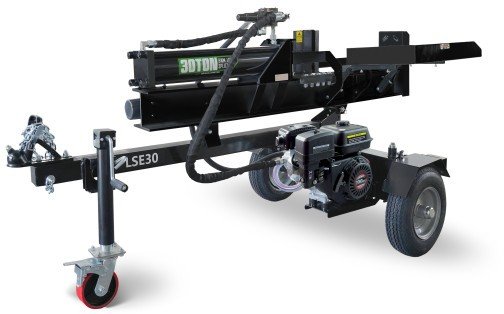
The BWM LSD50K Deluxe Series Log Splitter with Lifter – On Sale Now!
Kinetic Log Splitters: An Overview
Kinetic log splitters have risen in popularity for their simplicity and speed. The core mechanism involves one or more spinning flywheels powered by a motor. Once the flywheels reach operating speed, a lever engages the rack and pinion system; releasing the stored kinetic energy into a fast-acting ram that slams the log into the wedge.
While most kinetic splitters offer lower tonnage (typically under 10 tonnes), the actual effectiveness can be misleading. Because of the speed of impact, even stubborn pieces often split quickly.
Benefits of kinetic splitters include:
- Speed: Cycle times are typically under 3 seconds. You can split multiple logs in the time it takes a hydraulic splitter to finish one.
- Simplicity: There’s no hydraulic fluid, pump, or valve to maintain. The internal system is mechanical and typically easier to troubleshoot.
- Weight and size: Most kinetic units are compact and easier to transport or move around the property.
A Look Into Our Current Log Splitters for Sale
BWM LSE30LC Essential Series Log Splitter (30 Tonnes, Loncin 6.5HP Engine)
This model combines a rugged steel frame with a reliable Loncin petrol engine and a
high-performance hydraulic pump capable of delivering 30 tonnes of force. It can operate both horizontally and vertically, which is ideal for varied log sizes and weights.
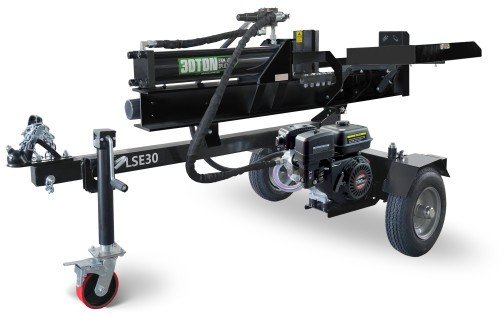
With a 2-stage 11GPM / 3000psi hydraulic pump, a heavy-duty tow bar, and auto-return control valve, this unit suits both residential and small commercial workloads. The Loncin engine offers strong fuel efficiency and has gained a solid reputation for reliability at a mid-range price.
Key Features:
Powered by LONCIN 6.5HP OHV engine
30 tons splitting force
Working in both horizontal and vertical positions
Split logs up to 26″ (660mm) diameter
2 stage pump at 13GPM/3300psi
15 seconds cycle time
Auto return valve
Heavy duty tow bar with 2″ (50mm) coupler
Portable design with a 6″ jockey wheel
2 Years Warranty
2 Years Engine Warranty
BWM LSD50HK Deluxe Series Log Splitter with Lifter
The BWM LSD50HK log splitter comes with everything you need. It is powered by a genuine commercial Honda GX390 OHV engine (Honda Australia Approved), with a key start function, and built to perform in demanding applications. Featuring a 2-stage, (16GPM/3850psi) pump for maximum speed without loss of pressure and is designed to split in the horizontal position. The BWM LSD50HK log splitter is fitted with a hydraulic lifting table to ease your back and arms as well as an 8″ jockey wheel for smooth transportation.
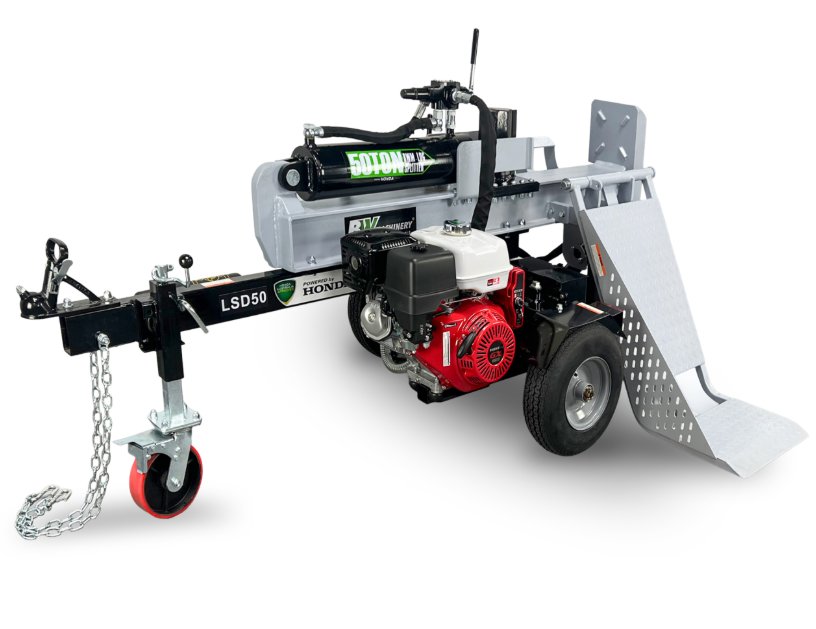
Key Features:
Powered by commercial Honda GX390 OHV “key start” engine (Honda Australia Approved)
50 tons splitting force
Split logs up to 30″ (762mm) diameter
2 stage pump at 16GPM/3850psi
11 seconds cycle time
Auto return valve
Heavy duty tow bar with 2″ (50mm) coupler
Portable design with an 8″ jockey wheel
Comes with a hydraulic lifting table (Capacity: 100kg)
3 Years Warranty
3 Years Engine Warranty
BWM LSV35H “Vertical” Log Splitter
The BWM LSV35H Log Splitter is powered by a genuine commercial Honda GX200 OHV engine (Honda Australia Approved), and is built to perform in harsh Australian applications.
Featuring a 2-stage, (14GPM/3500psi) pump for maximum speed without loss of pressure, this machine is well equipped to split logs up to 19″ in diameter with ease.
Utilizing an extremely heavy-duty winch and axe design compared to other vertical splitters in its class, alongside a hydraulic powered lifting table, turning logs into firewood at a comfortable waist height has never been made so easy.
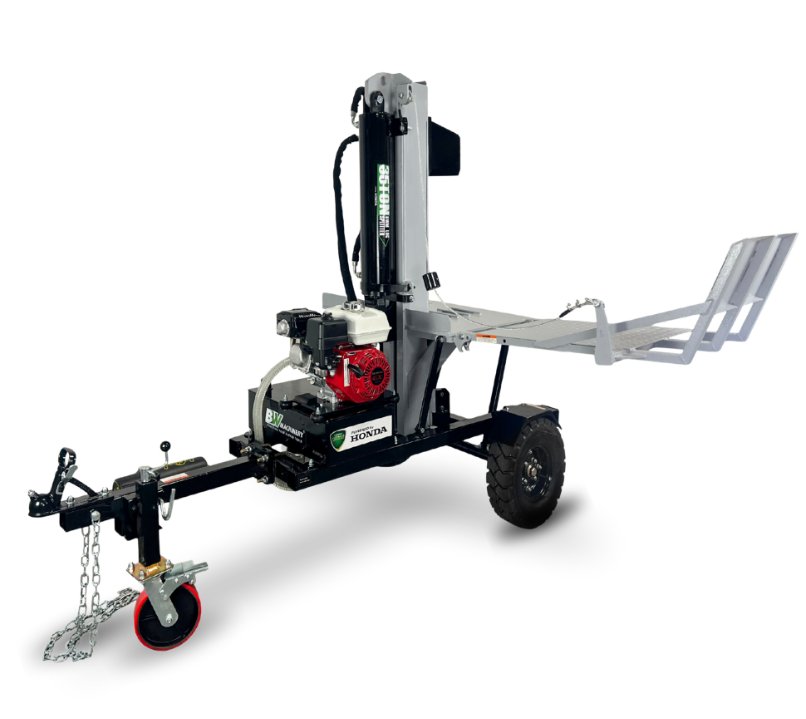
Features:
- Powered by commercial Honda GX200 OHV Engine (Honda Australia Approved)
- 35 tons splitting force
- Split logs up to 19″ (480mm) in diameter
- 2 stage pump at 14GPM/3500psi
- 12 seconds cycle time
- Auto return valve
- Heavy duty tow bar with 2″ (50mm) coupler
- Portable design with a 8″ jockey wheel
- Comes with a hydraulic lifting table (Capacity: 100kg)
- Heavy duty industrial wheels
- 3 Years Warranty
- 3 Years Engine Warranty
All our BWM log splitters have a minimum 2-year warranty, with the Premium and Deluxe ranges having a 3-year warranty. For your peace of mind, we also offer a money-back guarantee if your log splitter fails to split your wood*.
5 Things to Consider Before Choosing a Log Splitter
When deciding which log splitter to buy, ask yourself the following:
What kind of wood are you splitting?
Hardwoods like ironbark and box gum usually require a high-force hydraulic model. Softer species like pine or poplar, on the other hand, can be comfortably handled by a kinetic unit.
What size are your logs?
If you’re working with full rounds or anything wider than 400mm, a high-tonnage hydraulic splitter will be necessary. If your timber is already cut to size, a smaller unit will suffice.
How often will you use it?
Frequent users processing large volumes will always benefit from a machine that delivers on the key aspects of longevity and strength. More occasional users might prefer the convenience of a kinetic splitter.
Where will you be using it?
If you’re working on sloped, rugged, or remote land, portability becomes essential. Some hydraulic models come with tow bars, while kinetic models are often easier to push by hand.
How much maintenance are you prepared to do?
Hydraulic systems typically require a little more ongoing maintenance (such as oil changes, seal inspections, filter replacements). On the other side of the coin, kinetic machines require less attention, but can be more difficult to repair when issues arise with flywheels or clutches.
Explore Our Full Range of Log Splitters
Looking for reliable wood-splitting equipment? Explore the full range of BWM Products log splitters, with models designed for homeowners, acreage properties, farms and commercial applications.
With a choice of engine options, splitting capacities and configurations, there’s a BWM log splitter to suit different workloads and budgets.
Shop online for Australia-wide delivery, or find BWM Products through participating dealers nationwide. Browse our wider range of outdoor power equipment and machinery to find the right equipment for your next job.